
First, some good news: Congress Is Reversing Trump’s Steep Budget Cuts to Science (gift link). After the White House called for billions of dollars in funding reductions, senators and representatives are rescinding the proposed cuts and even boosting funds for basic research.
I’ve been making my way through chapters from the book, Biotechnology and AI: Technological Convergence and Information Hazards. Here’s a recap of the first few.
Biotechnology and AI: Technological Convergence and Information Hazards (Part 1)

The convergence of artificial intelligence and biotechnology (AIxBio) is no longer a futuristic concept. It’s a rapidly unfolding reality that is redefining the boundaries of medicine, agriculture, and national security. The new book Biotechnology and AI: Technological Convergence and Information Hazards
My friend and colleague David Kingsley invited me and a few others to contribute to an article on his newsletter (Neural Nexus): Top 5 Biotech Breakthroughs that shaped 2025. I wrote about a few topics in 2025 that really interested me (the fully automated laboratory, and AI in drug development highlighting David Baker’s lab’s work on designing multi-step enzymes).

STAT News: The NIH has lost its scientific integrity. So we left. Written by Sylvia Chou, Paul Grothaus, Alexa Romberg, and Vani Pariyadath.
Chou resigned Friday from the position of program director at the National Cancer Institute. Grothaus retired on Dec. 31, 2025, from the position of program officer at the National Institute of Aging. Romberg resigned Dec. 8, 2025, from the position of deputy chief of the Prevention Research Branch at the National Institute on Drug Abuse. Pariyadath resigned June 14, 2025, from the position of chief of the Behavioral and Cognitive Neuroscience Branch at the National Institute on Drug Abuse.
Davis Vaughan: Semi-automating 200 Pull Requests with Claude Code.
How to make your data analysis life easier using Positron, Raycast, and Espanso. This week on the Posit Data Science Lab (https://pos.it/dsh): I think I learned more from Andrew Heiss about Positron (and generally automating my life on MacOS) in one hour than I have in the past year. The recording will be posted on YouTube soon.
Alexander Titus: The Collapse of Proportionality.
When all risks are treated as intolerable, systems are driven underground or offshore. Informal use proliferates without oversight. Innovation concentrates in unaccountable hands. Legitimate actors retreat, leaving the field to those least inclined toward restraint. True safety does not come from eliminating risk. It comes from managing it—openly, proportionally, and adaptively.
Andrew Hunt at Asimov Press: Inventing the Methods Section.
Cellular Intelligence: Engineering Cell Fate: Towards a Foundation Model for Virtual Cell Signaling.
Seva Gunitsky: The Age of Academic Slop is Upon Us.
But the biggest effect is that peer review now becomes more about discernment or taste. If anyone can produce a competent empirical paper on any topic, the bottleneck moves to identifying which questions are important to ask in the first place.
Samuel Arbesman at Asimov Press: Why Do Research Institutes Often Look the Same? Samuel argues that new research institutes “canalize” into a small set of familiar forms (university-like departments or startup-like labs) because individual career risk aversion, investor incentives, and even tax-code binaries push organizations back toward the institutional mean. He suggests resisting this by enabling genuinely experimental structures, for example focused research organizations, alternative funding models, novel legal forms, and long-horizon, low-oversight philanthropy that gives unusual teams room to stay weird long enough to work.
Anthropic’s Frontier Red Team: AI for Critical Infrastucture Defense. New post about how AI could help defenders of critical infrastructure identify the vulnerabilities that attackers might exploit, and close them before they are exploited.
Anil Dash: How Markdown took over the world.
Evan Gorelick, New York Times: Why Do Americans Hate A.I.? Americans have a unique animosity against A.I. because it is arriving fast, everywhere, and often without consent, and it feels like a high-stakes extension of the same tech ecosystem that already eroded trust through privacy loss, manipulation, and misinformation. On top of that, people see immediate downsides, like job displacement, opaque and biased “black box” decisions, and power concentrated in a few companies, while the benefits feel uncertain or unevenly shared.
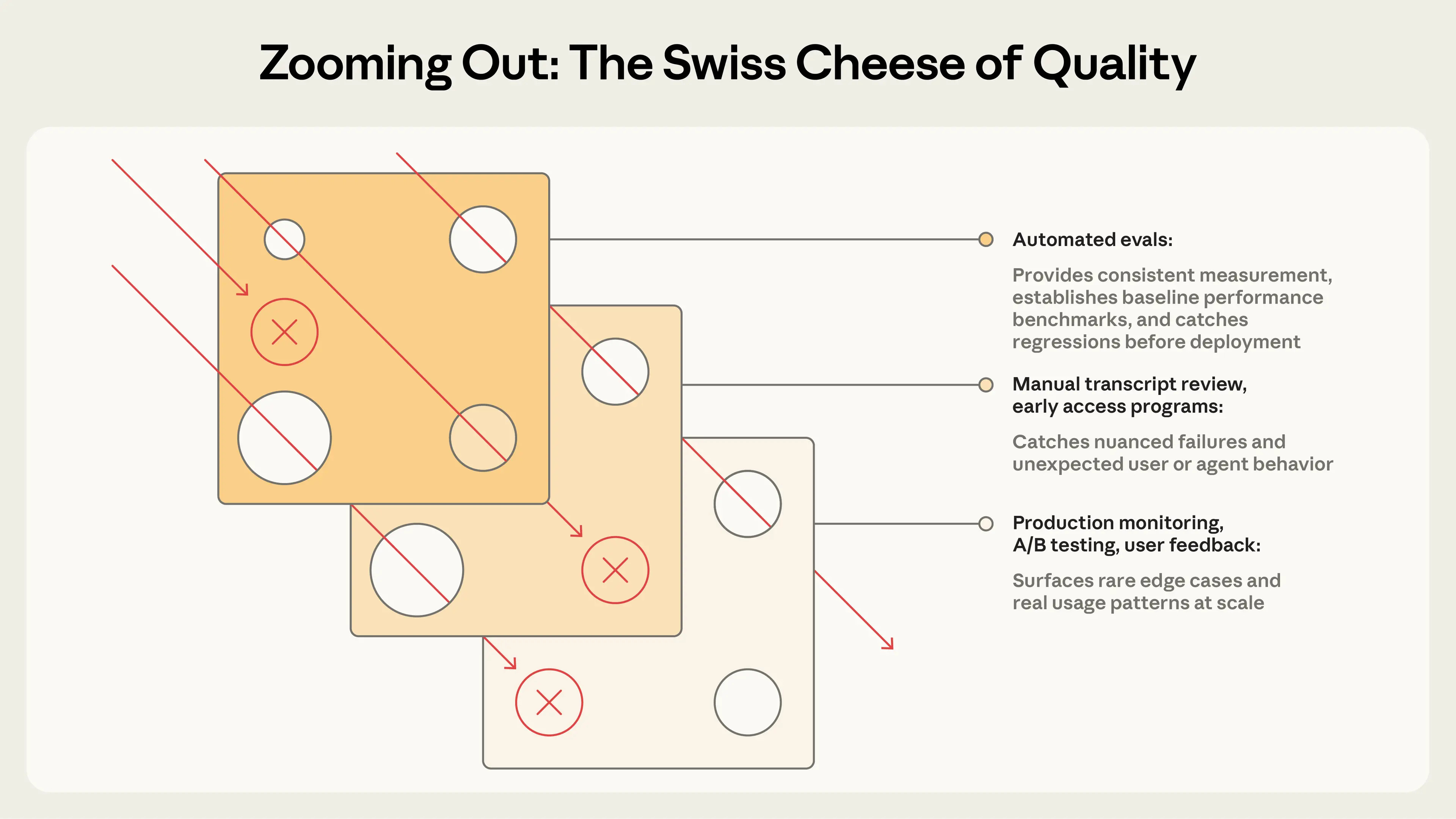
Anthropic: Demystifying evals for AI agents.
Microsoft: 2025: The year the Frontier Firm is born.
Benchling’s 2026 Biotech AI Report.
R Weekly 2026-W03: R & Python pluralism, RAG setup, tinyshinyserver.
Retrieval-Augmented Generation: Setting up a Knowledge Store in R.
The R Data Scientist 2026-01-13: roundups & community, tooling & infrastructure, visualization, spatial & mapping, LLMs & RAG, learning & methods.
If you’re not reading Matt Lubin at the Bio-Security Stack, you should. The next few updates below come from his own weekly recap: Five Things Jan 10 2026.
Boltz PBC Launches with $28M to Democratize AI Platforms for Drug Discovery. See more at boltz.bio/manifesto.
Nature Career Column: We need to talk about salaries in science. Academia too often has a ‘passion first, money second’ culture. Overcoming this mindset is crucial for building a happy career.
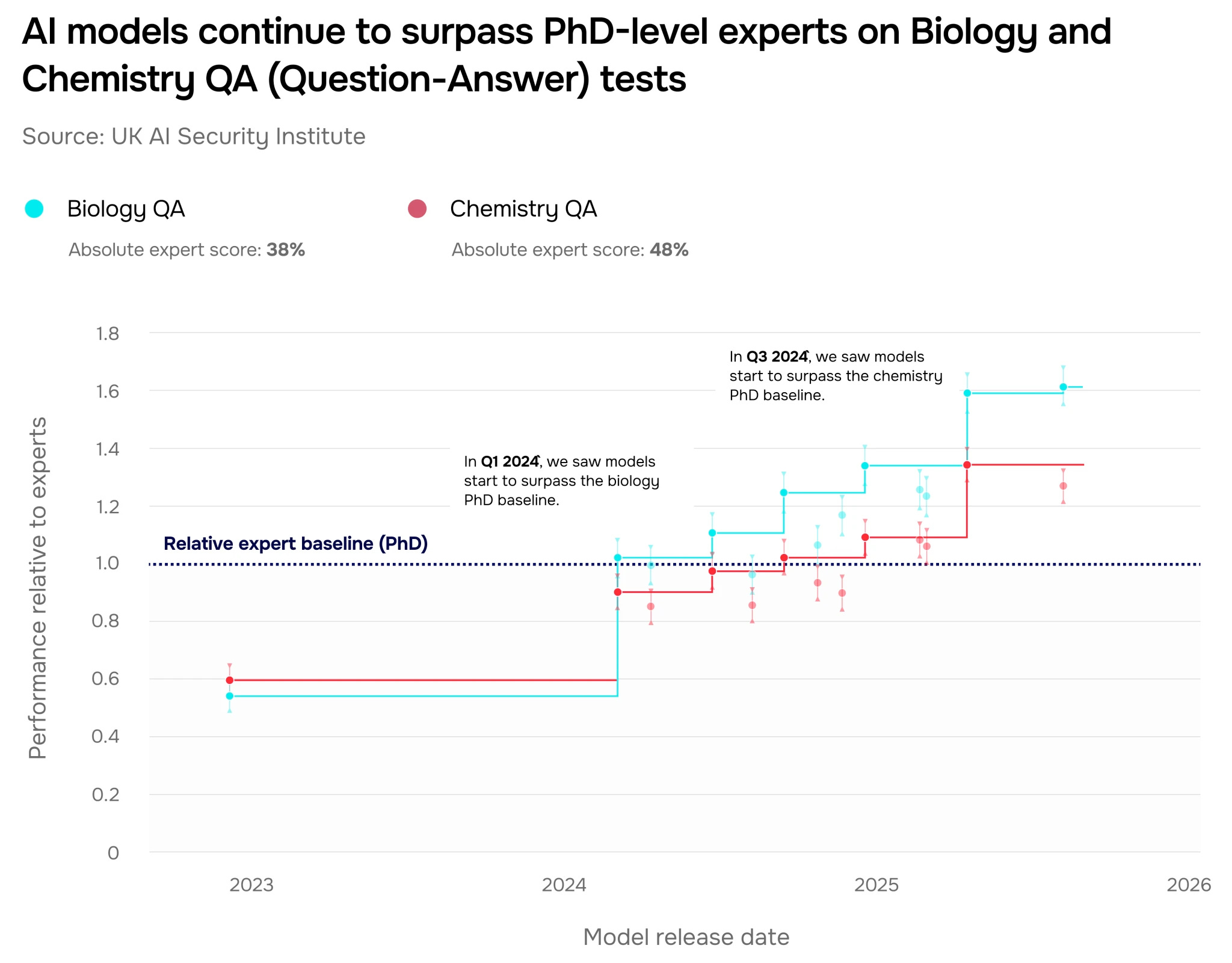
UK AI Security Institute releases its Frontier AI Trends Report.
Blog post from the Arc Institute: Stack: Simulating cellular conditions via prompt engineering, without the need for fine-tuning. And the paper: Stack: In-Context Learning of Single-Cell Biology.
Epoch: An FAQ on Reinforcement Learning Environments.
Claude and ChatGPT for health and life sciences research. Two announcements came out over the past week: (1) Anthropic: Advancing Claude in healthcare and the life sciences, and (2) OpenAI: Introducing ChatGPT Health. I wrote about them both earlier this week.

And for a little more shameless self-promotion, I wrote a blog post earlier this week on a paper I published last year, and correspondence published this week in Nature Reviews Biodiversity.
The Importance of Indigenous Voices in Conservation Genomics

A few months ago I published a review on genome engineering for biodiversity conservation with my colleagues at the University of East Anglia, Globe institute at the University of Copenhagen, Mauritian Wildlife Foundation, Durrell Wildlife Conservation Trust, University of Kent, Colossal Biosciences, and Colossal Foundation. I wrote about it here:
New papers & preprints:
A deep learning and large language hybrid workflow for omics interpretation
Homomorphic encryption enables privacy preserving polygenic risk scores
Keeping generative artificial intelligence reliable in omics biology
Ancestral diversity in complex disease genetics: from discovery to translation
Inter-tool Analysis of a NIST Dataset for Assessing Baseline Nucleic Acid Sequence Screening
Alignoth: portable and interactive visualization of read alignments
Monitoring biological effects of somatic cell genome editing