A few months ago I published a review on genome engineering for biodiversity conservation with my colleagues at the University of East Anglia, Globe Institute at the University of Copenhagen, Mauritian Wildlife Foundation, Durrell Wildlife Conservation Trust, University of Kent, Colossal Biosciences, and Colossal Foundation. I wrote about it here:

Our paper was published in Nature Reviews Biodiversity:
Van Oosterhout C, Supple M.A., Morales H.E., Birley T., Tatayah V., Jones C.G., Whitford H.L., Tollington S., Ruhomaun K., Groombridge J.J., Brickson L., Keyte A.L., Shapiro B., James M., Turner S.D. Genome engineering in biodiversity conservation and restoration. Nature Reviews Biodiversity (2025) DOI: 10.1038/s44358-025-00065-6.
You can read the paper (free) here: https://rdcu.be/ewG5R.
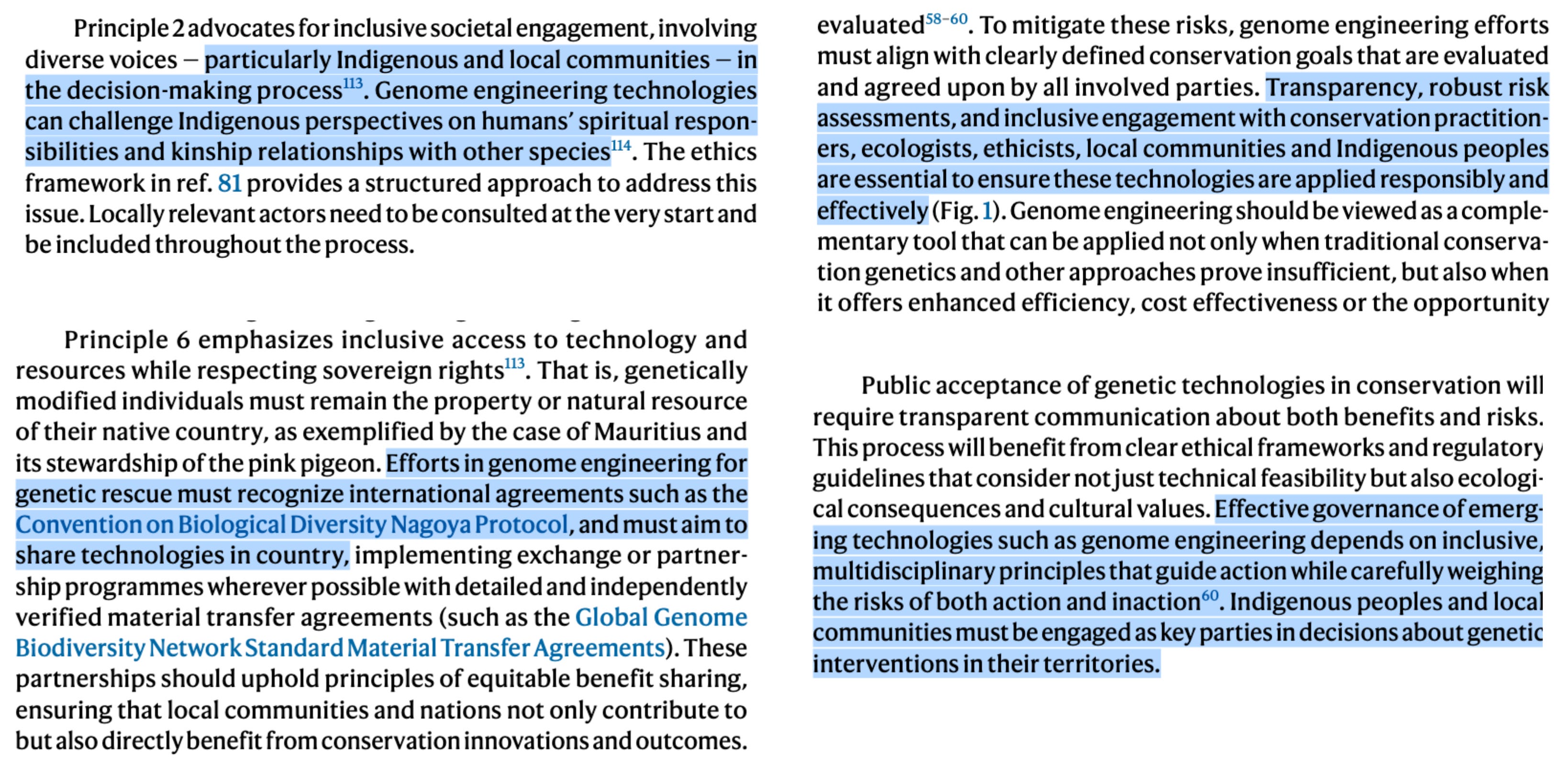
In this paper we made a substantial effort to highlight the importance of Indigenous voices, perspectives, and frameworks like the Nagoya Protocol throughout the paper. I’ve included a few excerpts from the original review paper below.
Today, Phillip Wilcox, Clare Adams, Riley Taitingfong, and Nic Rawlence published a letter arguing that we failed sufficiently highlight importance of considering Indigenous perspectives and frameworks.
Wilcox, P.L., Adams, C.I.M., Taitingfong, R. et al. Genome engineering for conservation might be a game changer but only with the incorporation of Indigenous voices. Nature Reviews Biodiversity (2026). https://doi.org/10.1038/s44358-025-00118-w.
Today we also published a response:
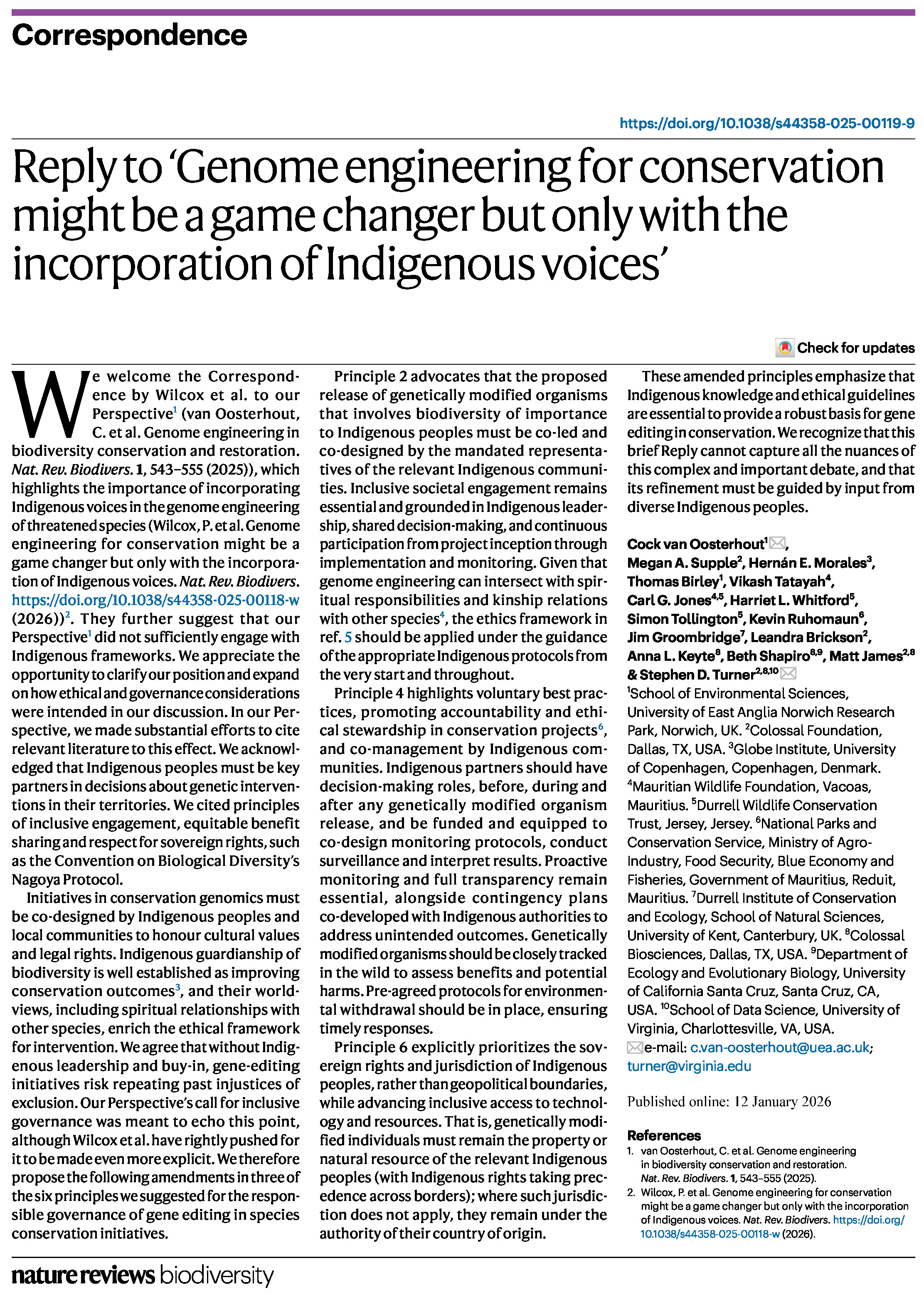
Van Oosterhout C, Supple M.A., Morales H.E., Birley T., Tatayah V., Jones C.G., Whitford H.L., Tollington S., Ruhomaun K., Groombridge J.J., Brickson L., Keyte A.L., Shapiro B., James M., Turner S.D. Reply to ‘Genome engineering for conservation might be a game changer but only with the incorporation of Indigenous voices’. Nature Reviews Biodiversity (2026). https://doi.org/10.1038/s44358-025-00119-9. Read free: https://rdcu.be/eYAH9.
We appreciate the opportunity to clarify our position and expand on how ethical and governance considerations were intended in our discussion. In our original Perspective, we made substantial efforts to cite relevant literature to this effect. We acknowledged that Indigenous peoples must be key partners in decisions about genetic interventions in their territories. We cited principles of inclusive engagement, equitable benefit sharing and respect for sovereign rights. We agree that without Indigenous leadership and buy-in, gene-editing initiatives risk repeating past injustices of exclusion. The letter from Wilcox et al. pushed for these calls to be made more explicit, so we did so in our response letter, which you can read here.