
A recent RAND report from surveyed over 1,200 students from middle school through college in December 2025 on how they’re using AI for schoolwork. The headline numbers: 62% of students now use AI for homework help, up from 48% just a few months earlier. And 67% of students agreed that using AI for schoolwork harms critical thinking, up from 54% in February 2025.
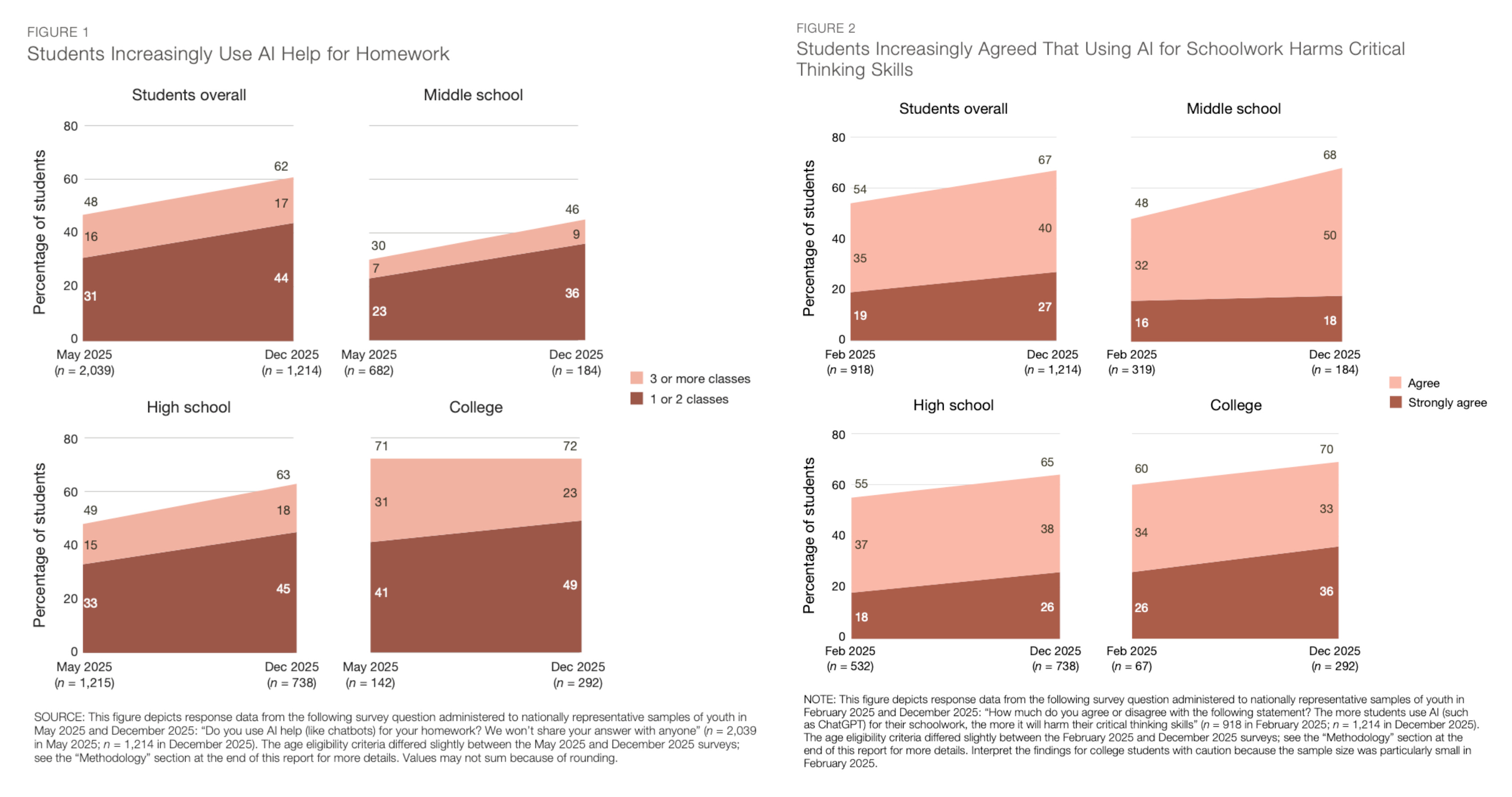
In short: Students are using AI more, and they believe more strongly that doing so is bad for them.
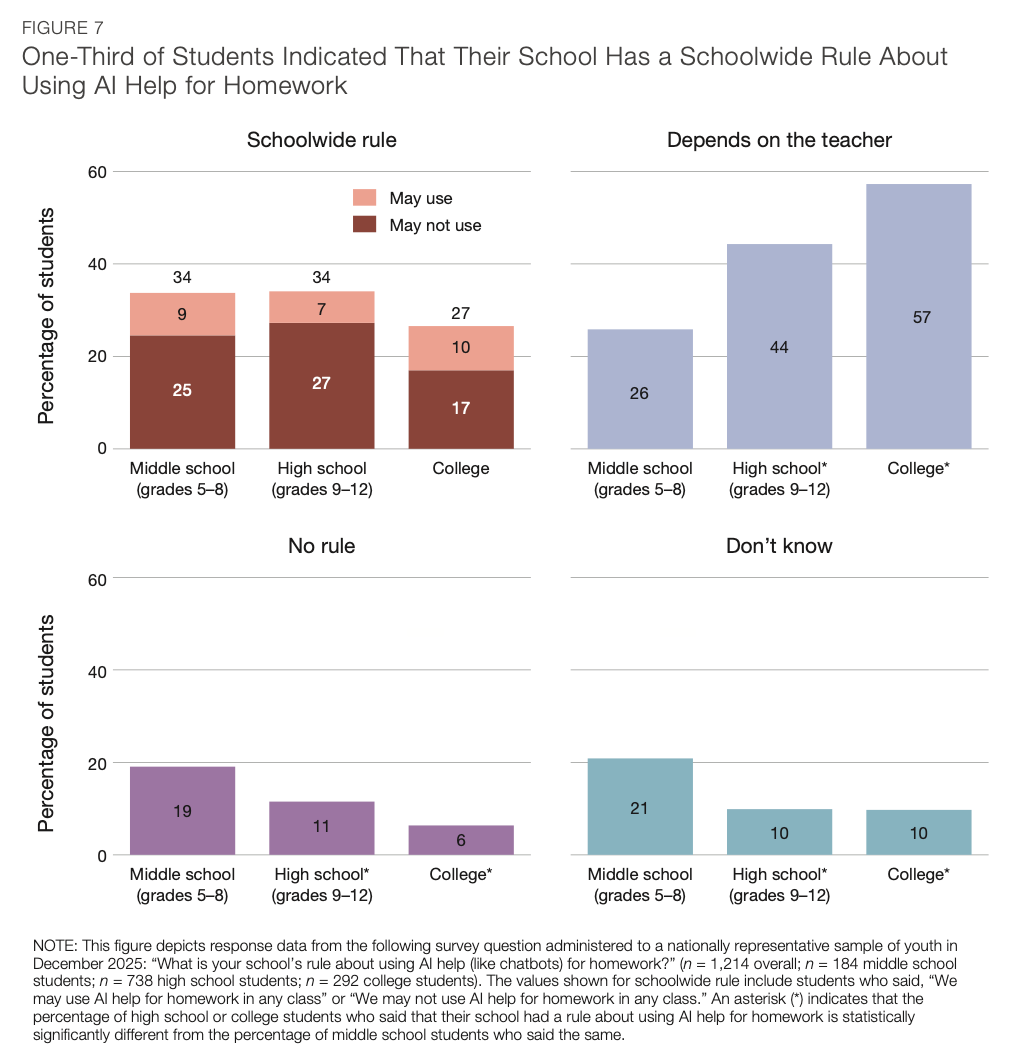
The data shows a grade-level gradient. Older students use AI more, are more likely to think teachers are checking for it, and are more worried about being accused of cheating. By college, 72% report using AI for homework, and 86% believe their teachers are checking. A majority of college students said the rules depend on the specific teacher, which means there are no real rules at all, just a patchwork of individual preferences.
Most students don’t consider their AI use cheating, with one exception: getting homework answers. For brainstorming and getting better explanations, large majorities said it was fine. Writing was more contested, with half of students saying “it depends.”
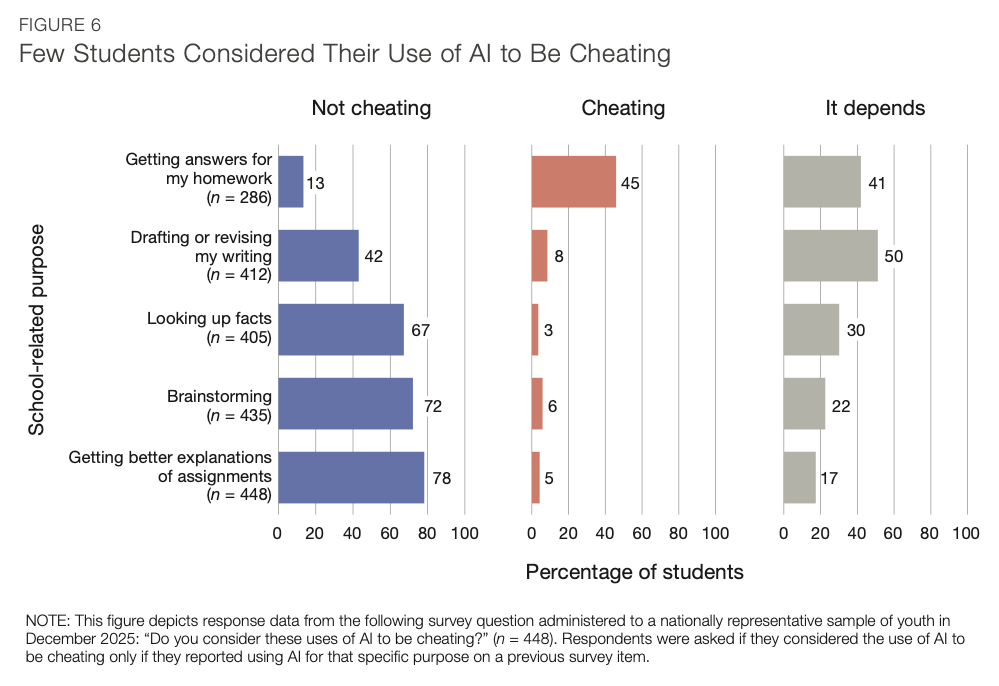
That tracks with the report’s recommendation that schools differentiate between “cognitive offloading” (AI does the thinking) and “cognitive augmentation” (AI helps you think harder). Students seem to already have an intuitive version of this distinction in their heads.

Only about a third of students said their school had any schoolwide rule about AI use. Middle schoolers reported the least clarity, which is concerning given that middle school is where AI use grew fastest over 2025.
From talking with colleagues here and at other universities I think the pattern matches what’s in this report. The students who already have strong foundations use AI to move faster through routine work. The ones still building those foundations risk skipping steps they can’t yet afford to skip. The report’s survey can’t distinguish between these two groups. A student using ChatGPT to brainstorm a research question is doing something different from a student using it to avoid learning how to formulate one.
The report recommends that schools adopt flipped classroom models to preserve cognitive friction during learning, citing modestly positive evidence from a recent meta-analysis.