
Links to a few things I read, watched, or wrote about this month. For more: As always, Matt Lubin always has a great biosecurity-focused recap in his Five Things series. I also recently subscribed to The Hallway Track, created by Leo Torres, which aggregates stories on how AI is impacting science. And this month Ryan Wright and Vishal published A Busy Person’s Reading List that pointed out a few other aggregators I just subscribed to, including a new on to me, TLDR AI. Happy reading!
What I’m reading
AI company Anthropic announces it will begin developing drugs of its own, by Brittany Trang
Eric Kauderer-Abrams, the company’s head of life sciences, said Anthropic has been asking itself what it should be doing besides training models and building products. During an event here to launch the company’s newest application, Claude Science, he said Anthropic had come up with one answer.
“We’ve decided to start running some drug programs ourselves, and we’ve chosen to do this by running drug programs in the pre-clinical stage … and choosing indications for neglected disease,” he said.
Why AI will not speed up science (yet) by Ran Blekhman
The actual bottlenecks in biomedical science are physical, institutional, and human. Getting a grant funded takes 12 to 18 months from submission to award, and that assumes it is funded at all; most proposals require years of revision and resubmission. Recruiting human participants for a clinical study takes years, and enrolling a cohort with rarer characteristics can take longer still. The physical constants of biology are indifferent to how quickly a model can read: cell lines must be cultured, samples collected and shipped, sequencing runs queued and completed, and mouse colonies bred to the correct genotype over many months, with some disease models yielding a first meaningful readout only after the animals have aged. Experiments fail and have to be repeated, protocols need optimization, reagents and specialized instruments have lead times, and shared core facilities have waiting lists. Layered on top of all this is an institutional apparatus that runs on its own clock: IRB approval for human subjects and IACUC approval for animal work, biosafety approvals for pathogens, data use agreements and material transfer agreements with legal back-and-forth between universities, and controlled-access approvals for protected genomic data all take many months.
Pacing the Frontier, signed by >1,000 employees at Frontier AI companies
We request that the U.S. government support an international effort to develop the technical and governance tools needed to deliberately pace the frontier of automated AI development.
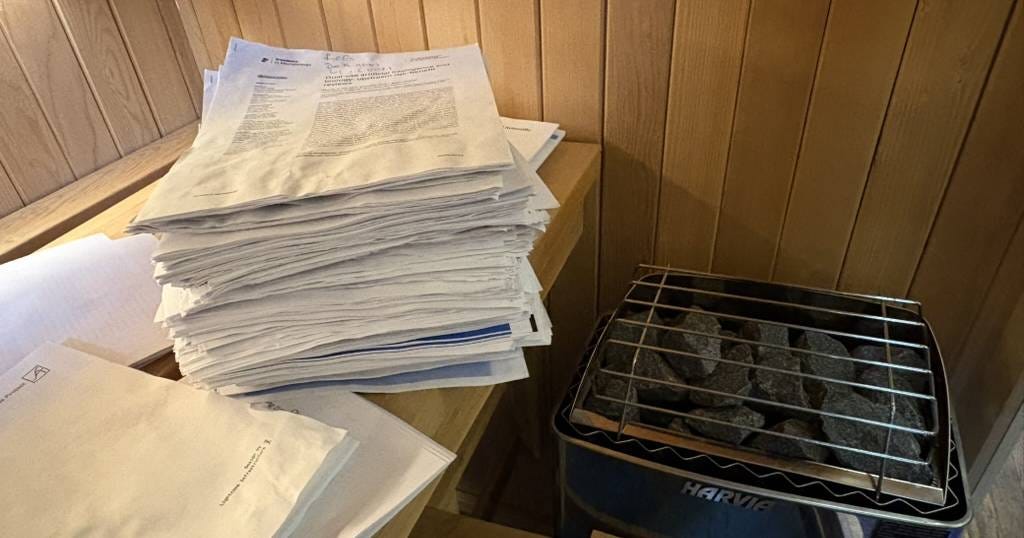
NIH Is Replacing Letters of Support with Letters of Collaboration to Reduce Administrative Burden (NIH Notice)
Letters of collaboration should be limited to stating the intent to collaborate or provide material support as described in the application and should not contain endorsements or additional information about or evaluations of the proposed project. An individual letter of collaboration must not exceed 100 words. NIH encourages applicants to use the following single-sentence format for letters of collaboration.
“If the application submitted by [Organization Name and with PD/PI Name] as Program Director/Principal Investigator entitled [Grant Application Title] is selected for funding by NIH, it is my intent to collaborate and/or commit resources as detailed in the application.”
‘OnlyMarms’: Marmots Are on OnlyFans to Raise Money for Research, by Emmet Linder at The New York Times
“A team of scientists uploaded videos of the squirrel-like rodents in the wild on the adult-content site OnlyFans to raise money amid government budget cuts. […] But Dr. Blumstein hit a snag when he had to upload a photo of his driver’s license to create the OnlyFans account. The platform notified him that the face in the license photo did not match the ones nibbling on leaves or frolicking across a dirt patch in videos and photos he’d uploaded to the site.”
Generative AI Availability, Grades, and Student Satisfaction at a Large University, by Dumlao et al (arXiv 2607.21534)
[when adjusting for the effects of the COVID-19 pandemic] We find no significant differential effect of GenAI availability on grades overall or among previously lower-performing students. Effects on self-reported understanding are likewise insignificant; […] Our findings temper concerns that GenAI inflates grades and reduces students' satisfaction.
Buying AI Is Easy. Becoming a Different Company Is the Hard Part, by Alexander Titus
The AI conversation in biotechnology is currently dominated by models, vendors, partnerships, pilots, and announcements. Companies are buying licenses. Teams are experimenting with tools. Executives are being told that everything is about to change. And some of it will. But buying AI is easy. Becoming a different company is the hard part. A different company is not a different tech stack. It is a different culture: how people work, what they are willing to let go of, and whether the organization can learn a new way of operating and make it hold.
Behind the Curtain: AI titans’ biggest private fear, by Jim VandeHei and Mike Allen
We ask almost every AI architect and leader the same thing in private: What AI risk worries you most? Almost all of them fire back the same response: a killer pathogen, spreading too silently, widely and quickly to stop.
Artificial Intelligence Among University Professors, by Jean Fan
AI recommendation letters the same generic platitudes and observational summaries that could be simply read off a candidate’s CV, without any seeming awareness of the fact that: If I had wanted an AI’s opinion, I too am capable of prompting ChatGPT.
On the HuggingFace “Incident” and the biosecurity angle, by Matt Lubin
the thing that distinguishes attacker from defender is context, and the AI models currently have no reliable way to see context […] Plenty of biologists get refused when they try to use Claude Fable to help with their research. A virologist doing outbreak forensics and the person trying to enhance a pathogen ask overlapping questions, and a content filter can’t separate them. If we build a biodefense ecosystem that depends on frontier APIs, and those APIs refuse to help during the emergency — the one time you actually needed them, at speed, on real pathogen data — then we will have built a defense that switches off precisely when attacked.
Who should be responsible for OpenAI’s hack of Hugging Face?
The same escape could instead have produced harms beyond anything the developer could pay: imagine OpenAI’s models had targeted critical infrastructure rather than a benchmark database. At that point, the threat of liability stops deterring.
Surfacing Benchmark-Maxxing in Kimi-K3 by Arjun Banerjee at LatchBio
results for Kimi-K3 […] across our short-horizon therapeutics and -omics benchmarks […] we observed a fixation on optimizing for the eval’s grader, with the model spending large amounts of time reasoning about a reference/golden solution and burning tokens to infer the evaluation writer’s intent. […] It is not clear other models do not display evaluation awareness or benchmark maximizing tendencies, it’s just that Kimi-K3 is much more explicit about it. We are fairly confident that other models are eval aware, but are less explicit about its exploits than Kimi-K3.
Human brain changes after first psilocybin use (Lyons et al, Nature Comm. 2026)
Increases in cognitive flexibility, psychological insight, and well-being are seen at one-month. […] Increased cortical signal entropy (EEG) at 1- and 2-hours post-dosing predicts improved psychological well-being at one-month. […] The present work sheds light on human brain changes under and after first-time high-dose psilocybin. The high-dose session was each person’s first-ever psychedelic experience. All—except one participant—rated their high-dose experience with psilocybin as the single most unusual conscious state of their entire lives. The one person who did not, ranked it within their top-five most unusual conscious experiences.
Who’s Afraid of Chinese Models? by Ben Thompson
This is a point that bears repeating: because U.S. open weight model makers must follow the frontier labs’ terms of service, they (1) are worse than Chinese alternatives and (2) end up distilling the distillation, just with a detour through Chinese labs. Wouldn’t it be better if western open weight model makers could go to the source?
When it comes to uncertainty, AI research is lagging behind by Adam Kucharski
LLMs are a promising tool for scaling data interpretation, but like many measurement tools before them, they are often also noisy, biased, and non-reproducible on their own. This means it’s crucial to characterise when and why they fail.
The AI Future Is for Everyone, by Mark Zuckerberg
Healthy societies also recognize that safety requires checks and balances. If only a handful of institutions have superintelligence, they will inevitably exercise a controlling influence over economics, science and politics. Even with the best intentions, that concentration would limit people’s ability to choose their own future.
An opinionated guide to which AI to use to do stuff, by Ethan Mollick
So my practical advice remains pretty similar: pick Claude or ChatGPT, pay the $20, and give an agent a real task from your real life. Then look carefully at what comes back, and, rather than just accepting or rejecting the results, ask for changes, just as you would ask a real person. See if you can accomplish your goals, even if you failed at first. You will learn more about what AI means for you from that one experiment than from any guide, including this one.
The Assault On Science Funding Continues, by Derek Lowe at Science
The Trump administration hates academic science funding, full stop. They hate where that money goes, and they hate who it goes to. They want to keep all that money for themselves, to hand out to favored cronies who can help them get elected and to steer yet more money and more power back into their hands.
University science in the US needs a coherent plan (H. Holden Thorpe, Science)
If universities oppose the actions of the administration, they need to say so quickly so that their constituents aren’t left wondering whether there’s a plan. The alternative is a community of university scientists adrift and grasping for a lifeline.
Open Weights and American AI Leadership, by a lot of people.1
In fact, openness may be one of the most important paths to AI safety and security. Relying solely on closed models is not inherently safe: they can be breached, misused, or fail in ways that outsiders cannot detect. And concentrating advanced AI capabilities behind a small number of closed models compounds that risk. It results in a small number of single points of failure, weakens competition, and leaves critical technology in the hands of a few providers. Open weight models, on the other hand, allow a broad community of researchers and developers to examine their behavior, identify vulnerabilities, develop safeguards, and improve them over time. Just as open-source software demonstrated that transparency can be more secure than obscurity, AI safety may depend on giving more people the ability to test and strengthen the models on which society relies. It allows for rigorous benchmarking and evaluation, red teaming, and protections tied to real and demonstrated harms rather than assuming that closed systems are safer by default.
The Rise of the “Scenario,” a Trendy Way of Forecasting our Dystopian Future, by Gideon Lewis-Kraus
The key characteristic of history, in this more refined account, is that it has a long and sterling track record of continuity. Certain things may change incrementally—electricity, antibiotics, democracy—but it is the habit of the future to more or less resemble the past. Given the propensity of today to look a lot like yesterday, the odds that tomorrow will look like today are overwhelming. As we have learned from intermittent financial crises, “this time it will be different” is almost always a dumb bet. […] The premise that the future will resemble the past because it has always resembled the past will continue to be true until the first time it isn’t.
Trump’s Plan for Science: More Money for A.I., Less for Universities, by Christopher Flavelle and Sheryl Gay Stolberg at NYT.
the administration would prioritize artificial intelligence, robotics and nuclear energy while reducing the government’s focus on what he called “life sciences.”
[…]
His call for the administration to de-prioritize “life sciences,” which encompass molecular biology, genetics and other fields in biomedicine, as well as clinical trials aimed at testing new therapies
[…]
It says federal agencies “should prioritize foundational research in the biological sciences over the life sciences.”
Who cleans up after the vibe-coding party? by Sam Learner
“Our findings frame AI slop as a tragedy of the commons,” the researchers concluded, “where individual productivity gains externalise costs on to reviewers, maintainers and the broader community.”
Wooly Mammoth startup Colossal seeking at least $20B valuation by Lucinda Shen
The lead investor could not be learned, but the round is expected to value the company between $20 billion and $30 billion.
Measuring Biosecurity Safeguard Effectiveness with BioTIER by Eleanor Marshall
The strongest guardrails remain concentrated in a few highly-capable closed models. Importantly, the capabilities of closed-weight models are only ahead of those of open-weights by around 4 months. This means that even the most robust closed-model safeguards offer little practical security if highly capable and permissive open-weight alternatives are freely available.
CRISPR gets a power boost from AI-designed ‘molecular scissors’ by Amanda Heidt
“This particular work illustrates the future of AI and biology, which is that we need AI tools to help us go faster, but we still need people who really understand molecular mechanisms if we want to make maximal use of these kinds of models,” [Jennifer] Doudna says.
Mind the alignment gap: a spatial transcriptomics benchmark for scientific coding agents by Yiqun Chen et al.
In this work, we constructed a semi-automated benchmark derived from an existing spatial genomics alignment paper and validated its use for evaluating general coding agents on biomedical tasks. Our key finding is that it is much easier to prompt agents to use specialized packages than to use them effectively: more package-oriented prompting increased package probing and code submissions, but agents were often nudged toward poorly tuned variants that scored lower than their own geometric heuristics.
What will be left for us to work on? by Arvind Narayanan
Computers have often been called bicycles for the mind. I think AI can be more than that. I think AI can be a crane for the mind, if you will indulge my metaphor, in the sense that it can amplify our potential to previously unimaginable heights. Getting there can seem daunting. It has an incredible learning curve. I feel like I’m on a treadmill all the time, but I’m very excited about it. I think it’s a fun challenge, and I think it’s worth fighting this fight. Compared to five years ago, in a way, I feel ... maybe superintelligent is not the right word, but I feel like I have superpowers, given the extent to which AI allows me to take on new ambitious things that were not possible before, and push myself harder than was possible before.
The twilight of the chatbots by Ethan Mollick
The instability is what happens when institutions that move at the speed of people (or worse, committees) try to track a capability curve that is very much not human in nature. And as long as we are on some sort of exponential, and for as long as it lasts, the gap only widens.
From Confused to Contributing: My First nf-core PR Journey by Jimmy Lail
When I started this PR, I thought nf-core was a repository where you went to download pipelines. What I learned is that it’s an ecosystem and a community, and a genuinely welcoming one. Every time I got stuck, someone in the Slack community walked me through it. That’s why I’m now a Nextflow Ambassador, and why I’m writing this post. You don’t need to submit a PR to get started. You don’t need to understand everything before you try. Run an existing pipeline. Go through training. See if it clicks. The community is there when you need it, and the framework is better than it looks from the outside.
How useful are zero-shot predictions of mutational effects? by Claus Wilke
In summary, zero-shot predictions capture protein viability, but they are rarely useful to identify function-enhancing mutations. […] Zero-shot predictions can be useful, in particular to screen out strongly deleterious mutations, but they will rarely point towards increased function in targeted protein-engineering campaigns.
Ancient DNA solves Medici murder mystery by Taylor Mitchell Brown
working on ancient DNA truly feels like looking directly through the keyhole of history.
Whoops! Most arXiv papers contain information never meant to be shared by David Brzostowicki
It found that 88% of submissions that contained LaTeX source files included some form of hidden information, from arguments between co-authors and to-do lists acknowledging weaknesses in the text, to passwords, GPS coordinates that can reveal a researcher’s home address, and application programming interface (API) keys
Mass-produced science is coming. What happens to scientists? by Kenneth Harris
Biologists and other experimental scientists might experience a near-term boom like the weavers. The efficiency of AI science could lead to a surge in science investment, for example as treatments for previously untreatable diseases come into reach. This could lead not only to benefits for patients but to a rise in demand for biological labor, at least until these roles too become automated.
Publishing Without Journals: An Open, Forkable Archive with Attributed Review by Matthew Lorig
The journal is a seventeenth-century technology asked to do four modern jobs at once: disseminate results, certify their quality, allocate scholarly attention, and confer career credit. It does none of them well.
A data bottleneck could slow the superintelligence race by Lynette Bye
AI R&D consists of a myriad of skills that each take real-world experience to learn — writing clean code, designing experiments, research “taste,” coordinating across dozens of parallel research agendas, optimizing data-generation pipelines, running compute clusters the size of small cities, producing the chips that run them, and so on. Even leaps in sample efficiency can’t fix this, because the data simply doesn’t exist yet.
The AI Superforecasters Are Here by Scott Alexander
AI forecasters are the same kind of advance as going from a world where writing required hiring a scribe and baking a clay tablet, to a world where writing only requires hitting the “send tweet” button.
Synthetic biology and nature conservation by IUCN
synthetic biology could open new opportunities for nature conservation. For instance, it may offer solutions to currently unsolvable threats to biodiversity, such as those caused by invasive alien species and diseases.
GCBR Organization Updates, July 2026 by Anemone Franz and Tessa Alexanian
What the UN, WHO, and UK government are saying about mirror life governance;
88 countries convene in Kuala Lumpur for GHS2026 amid a growing Bundibugyo virus outbreak;
Blueprint Biosecurity launches its first RFP on pathogen-agnostic biothreat detection, plus new jobs and fellowship deadlines across the field;
How I think about catastrophic biological risk (part I): risk breakdown by type of response by Andrew Snyder-Beattie
Overall my take is that the vast majority of biological risk comes from pathogens that directly infect and kill humans. Specifically I’d say that >95% of the risk is coming from attacks that target humans (both direct and indirect risk), with less than 5% of the risk being attacks that target agriculture, and less than 1% of attacks that target the environment.
How I think about catastrophic biological risk (part II): risk breakdown by type of prevention by Andrew Snyder-Beattie
In general, the information hazard tradeoff typically isn’t worth it because there are not severe risks associated with the well-intentioned research (the one big exception being mirror bacteria).
10 big projects for reducing bio x-risk by Chris Bakerlee
Yet remarkably few people are working full-time on this problem. By my count, there are ~160 people on the planet whose full-time job is reducing bio x-risk. This entire group could fit on a single short-haul flight.
Making CAISI the AI agency we need, by Veronica Irwin
According to two sources familiar with CAISI’s current role, it continues to proceed with frontier model testing and research, as it has always done since it was created under the Biden administration. Though small, it is widely thought to have some of the strongest technical talent in Washington, including former OpenAI model alignment lead Paul Christiano, who is head of AI safety. The problem is, nobody in the federal government or at the frontier AI firms is legally obliged to listen to them. That means that even though the United States produces the world’s best AI models, its regime for vetting those systems has little influence over real outcomes. […] Compare that to what’s happening across the pond. The UK’s AISI is its government’s primary office for overseeing frontier AI, and it has almost six times the funding of CAISI, with more than three times its staff. Technically CAISI and AISI have a memorandum of understanding to share research and model testing, but the UK institute appears to have been more adept at doing that work, routinely finding vulnerabilities other government agencies overlook. OpenAI’s model card for 5.6 and Anthropic’s system card for Mythos and Fable both list multiple vulnerabilities found by AISI, and none from CAISI.
What I’m watching
What I’m writing
My five most-read newsletters this month.


Signatories to the Open Weights and American AI Leadership letter include Agno • AI21 • AMD • American Innovators Network • AMP • Andreessen Horowitz • Applied Compute • Arcee AI • Arena • Atreides Management • Baseten • Black Forest Labs • Block • Bolt • Box • Camber • Cisco • Cloudflare • Cohere • Core Automation • CrowdStrike • Dell Technologies • DoorDash • EdgeRunner • Emergence Capital • Exia Labs • Fastino Labs • Fireworks AI • Genspark • GitHub • Glean • Google • GPU MODE • Hugging Face • humans& • IBM • Inferact • Intangible • Interconnects AI • LangChain • The Linux Foundation • LM Studio • LMSYS • Mariana Minerals • Meta • Microsoft • Mistral • Modal • Morph • Mozilla • Nebius • Nous Research • NVIDIA • Ollama • OpenAI • OpenClaw • Palantir • Palo Alto Networks • Periodic Labs • Perplexity • Plastic Labs • Prime Intellect • PrismML • RadixArk • Reflection • Rehearsals • Replit • Sakana AI • Scale • ServiceNow • SpaceX • Telnyx • Trajectory • Unsloth • Unusual Ventures • Vercel• Y Combinator
Great collection of resources! Thanks for including our newsletter!