
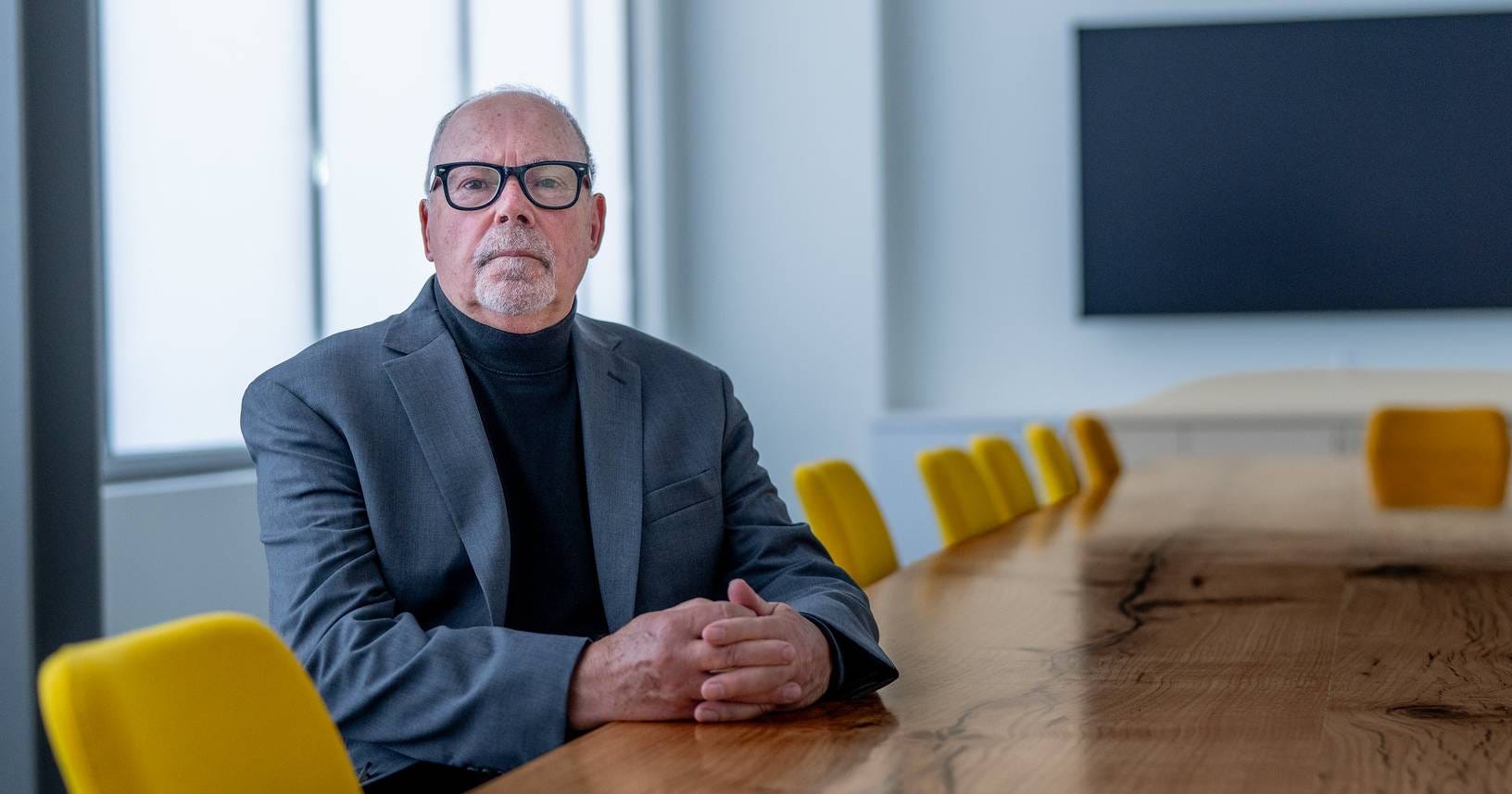
Phil Bourne, the founding dean of the University of Virginia School of Data Science, passed away on March 8, 2026. UVA Today published a memorial recounting his life and impactful career as a scientist and builder.
Phil arrived at UVA in 2017 as Director of the Data Science Institute, succeeding Don Brown, who had founded the institute. In 2019, backed by the largest private donation in UVA history, Phil shepherded the institute into UVA’s newest school, becoming its first dean. He called it “a school without walls,” and he meant it. The School of Data Science under Phil’s leadership was meant to work alongside other schools, bridging disciplines and elevating the university as a whole.
Case in point: About a month after Phil arrived at UVA in 2017, I met with him while I was still a faculty member in the School of Medicine. His office was in a trailer because the Data Science Institute had no home yet. He had been on Grounds for only weeks, and already he was reaching out across schools. When I met with him he pressed on me the case that the Data Science Institute and the School of Medicine needed stronger collaborative ties. That kind of bridge-building was instinctive for Phil. It’s a mission that, in my current role at SDS, I’m still charged with carrying out.
Before UVA, Phil had already built a career that spanned continents and disciplines. Phil spent two decades at UCSD where he co-directed the Protein Data Bank, a resource that has underpinned essentially every drug discovery effort of the past 30 years. He then served as the first Associate Director for Data Science at the National Institutes of Health, leading the Big Data to Knowledge initiative. Phil has co-authored hundreds of papers and and accumulated over 100,000 citations, placing him among the most-cited scholars in UVA history and in science generally.
Phil was also the founding Editor-in-Chief of PLOS Computational Biology, where he created the beloved Ten Simple Rules series. He was so prolific in the series that the meta-article “Ten Simple Rules for Writing a PLOS Ten Simple Rules Article” literally includes, as Rule 4: “Be Philip E. Bourne.”
I left UVA in 2019 to spend some time in industry. In 2023, I found myself in a difficult spot at a biotech startup, having just watched my boss and more than half my team get fired after joining only a couple months prior. I sent Phil an email, not quite sure what I was looking for. He invited me to his office over Christmas break in 2023 and spent the better part of an afternoon catching me up on the present and future of the School of Data Science. Phil, along with Don Brown, was the reason I came back to UVA. Phil and Don both reminded me why academic data science was worth dedicating a career to.
Just last month Phil had enthusiastically agreed to join me as a co-author a Ten Simple Rules article I’ve been working on about moving between academia and biotech. I will miss his contributions to that paper. But more than that, I’ll miss the kind of person who, after decades of building institutions and extremely busy running a new school like a scrappy startup, still answered a cold email from a former colleague going through a rough patch and said, “Come to my office. Let me tell you what we’re building.”
Phil’s vision and leadership were legendary. He leaves enormous shoes to fill, and I don’t envy the next SDS Dean who has to try. But Phil also leaves behind something durable here at the University of Virginia: a unique school with an inspiring origin story, a clear identity, an extremely talented faculty and staff who motivate me every single day, extremely bright students who keep me on my toes, and a mission that resonates more now than ever. For myself and my stellar colleagues here in the School of Data Science: the best tribute we can leave to Phil is to keep building the School Without Walls he envisioned.
Onwards, Phil.
Awww, that's a good reminiscence, Stephen.
Thank you for your thoughtful memoriam for Phil. We were colleagues together in the Hendrickson group way back -- and friends -- and have kept in touch over the years. I was just going to write to him yesterday when I heard the sad news. Thank you and "Onward!"